Feeding Flocks Real Freshly Fermented Foods in Accord with Seasons: A Guide to Fermenting and Sprouting and Optimizing Feed Mixes
Healthy Birds start with High Quality Diet, which you must provide yourself, as it is not available commercially. Commercial pellets are substandard, poor quality, and nutritionally incomplete. We shall obtain whole grains, seeds and legumes, which we shall soak, ferment, or sprout to maximize nutritional impact. Then to our bird’s diet we’ll add other foods such as greens, fruits, various protein sources, and micro-nutrients to fulfill their needs and maximize their vitality.
I’ll begin by focusing on WHAT we feed, and HOW we prepare it. Practical enough if your flock(s) are large. The specific nutritional values of each ingredient will be discussed further on. What I feed in Winter differs from what I feed in Summer, so I shall describe two basic ‘recipes’ for those seasons. The main WHY I shall now share regards concording the feed with the season or the clime. This WHY is well exampled by Corn, which, as many of you have heard, is a “hot food” and its thermal effect helps birds fight chill during cold, however they may suffer from it during a heat spell. All foods should be so considered, if you wish to fully optimize your bird’s diet. What’s best in cold weather is not what’s best in hot.
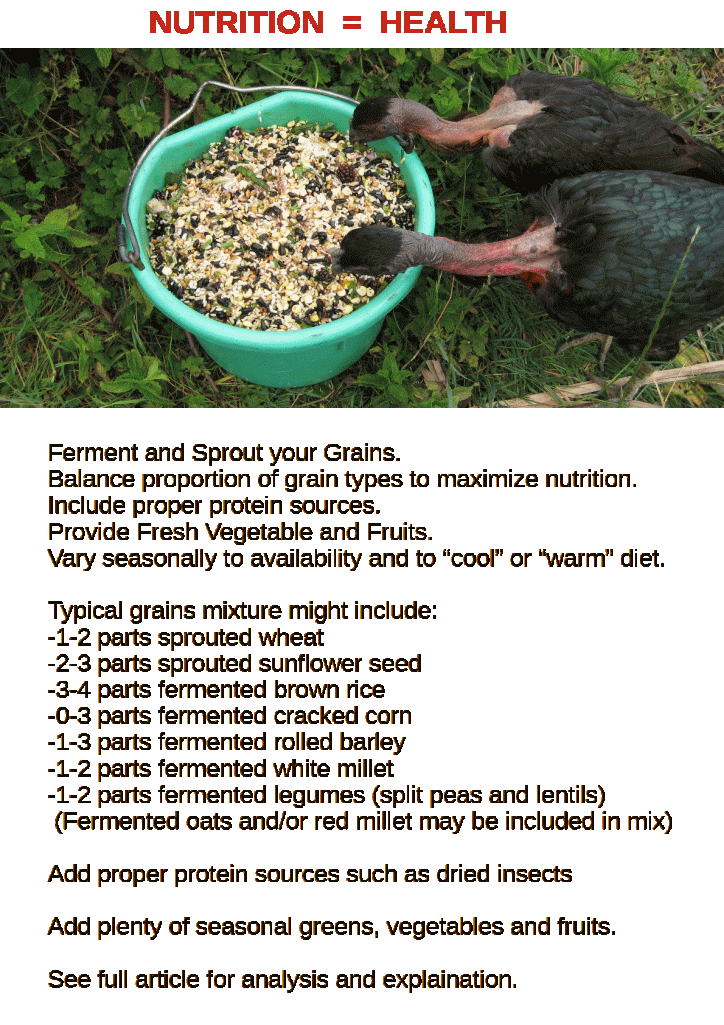
We make a base mix of grains, legumes, and seeds. Much of this base mix is fermented…for which I use 5 gallon buckets. “Base Mix” is NOT a nutritionally complete diet; it is the ‘base’ or foundational portion of their diet; Caloric bulk; “Base of their food pyramid”; Cereals seeds and legumes mix which is supplemented with other foods, particularly for birds with limited or no access to ‘free-range’. Birds also need additional nutrients found in other vegetative and and in protein rich foods.
Base mix can vary substantially. Utilize what is available and economical in your region. Understanding natures of ingredients enables you to formulate your base mix to suit best your clime and circumstance. Soaking and Fermenting reduce anti-nutrients (phytates), and make more bio-available the nutrients in cereal mixes, so improving your food values. Such isn’t necessary for good nutrition, if birds access plenty else, especially if free to forage in ideal ranges, but the more the birds rely on you directly for their nutrition, the more beneficial it becomes to optimize your base-mix accordingly. And to provide correct additional foods to achieve complete nutrition, optimize health.
WINTER BASE MIX (Cold Damp Rainy) for a large number of birds.
3-4 parts cracked corn, 2 parts brown rice, 1-2 parts whole wheat, 1 part white millet, 0-1 part whole barley, 1-2 parts red millet, 1-2 parts lentils and peas mixture. A small amount of flax seed also added. (Vary grains as befits your circumstance, but keep warming corn and/or red millet high, and cooling barley low in proportions.) These are fermented; Method: Into chlorine-free water add splash molasses, (bit of yoghurt the first time). thereafter a cup of the previous culture), stir, add grains*. (*optionally, before ferment, pre-soak overnight then drain your hard husked grains to more completely remove phytates.) Let sit in temperate or warm area for two (maybe 3) days then drain and add: 3 parts sunflower seeds (hulls on okay), 2 parts rolled oats. Other grains legumes and seeds as available may be used. (Red millet, white rice, safflower seed, pumpkin seed, sesame seed, chick peas, etc.) Add a generous handful of oyster shell flakes, some grit (volcanic grit preferred for added minerals content). Add proteins that balance the amino acid profile (especially methionine) such as Soybean meal and or Fishmeal. Maybe a bit of brewers yeast. Provide plenty of various greens. And orange veggies when you can. Add c 1% seaweeds or kelp. I have a separate article, following, on greens, focusing on wild weeds.
Vary grain and legume elements by what you have available, or is most economical, (or convenient: as a premix “scratch” might be for those of you with but few birds). But bear in mind corn and red millet are hot foods: good for cold climes, (and increasing their proportions even higher during a harsh cold snap is advised), but barley and chickpeas and sprouts are cooling: to be increased to high proportions during hot weather. (So in Summer, we do balance base mix heavy on barley and on sprouts, low on corn, red millet).
Give Proteins. (Discussed below in detail) Fishmeal, whole bean soy-meal, insects, eggs, meats, dairy, shrimp-meal (if made WITH heads or of entire shrimp. to balance amino requirements. Focus on balance of essential aminos, especially lysine, methionine, but do include the full spectrum.
Give oils and fats: In cold temps extra fats are helpful; in the winter base mix, addition of a drizzle of oil to your base-mix (such as peanut or coconut oil or most any decent oil) recommended. Oils high in omega 3 especially. And/or give lard or scraps from butcher or what-have-you. (If I have a skinny bird or an early chick in cold season then often I provide directly to them a special ration of oil, butter, or fat.) Butter can also provide vitamin A when orange/yellow veggies are scarce.
Fruit: oranges, apples to help guard against respiratory infection (vitamin C etc). Half an orange impaled on a chopstick or twig, or hung by stout wire. Raisins as hand fed treat (high in iron-good for blood). Many berries are rich in antioxidants as well as vitamins
SUMMER BASE MIX (hot or warm temperate)
0-2 parts cracked corn, negligible red millet, 4-5 parts brown rice, 2-3 parts whole barley, 1 part white millet, 1-2 parts lentils/peas blend or alternated, flax seed – ferment these. Optionally pre-soak and drain before fermenting (for several hours/overnight) the hard husked grains to more completely remove phytates. Vary grains as your locale and economy dictate, but keep cooling barley and cooling sprouts higher, and keep warming red-millet and corn lowered in relative proportions. Adjust more radically during extreme heat spells. …. If temps are warmer then fermenting for 2 days is long enough, even one day will be beneficial. It should still smell sweet, not smell very sour. A detailed discussion of fermenting given further on.) Separate the 2-4 parts whole wheat and sprout it. Also, 3 parts whole sunflower seed which we sprout as well. Add fishmeal. soymeal. kelp, grit, rock powders, (oyster)-shells to post fermented mix.
Provide ample seasonal greens and many seasonal fruits and vegetables as available. Here we have various berries, apples, squashes and pumpkins in abundance when in season. For penned birds I add generously many chopped weeds, kales, and other greens to grain mix. and or provide leafy greens retained in mesh wall feeders. (Not so important if birds range and forage in lush areas.)
Additional fats and oils are not particularly recommended in summer except in modest amounts for omega 3; like fish oils or other omega 3 rich oils, also cod liver oil (vitamin D for layers seeing too little sunshine).
So in Winter the key differences are that we sustain body warmth with corn (and red millet) and avoid cooling foods especially the barley. In winter we add oils or fats, again to sustain body warmth. I add Vitamin C rich source such as an occasional orange.
In Summer the key difference is we serve cooler foods, particularly barley, avoiding much (or even any) corn or red millet. We sprout wheat and sunflower seeds which renders them cooler, (as well as releasing enzymes and other benefits). Fruits and vegetables are more abundant and are also appropriate foods in accord with season.
PROTEINS
Commercial pellets are considerably lacking in proper protein, lacking in a complete “essential amino acid full BALANCE” profile. Despite some manufacturer based assurances, they’re not really complete nutrition. Generally they’re soy based. Soy alone has an amino acids profile lacking sufficient amounts of Methionine, Threonine, and Valine. Often manufacturers (partially) compensate for them with some synthetic aminos; especially (petroleum based) DL methionine (methionine is an essential amino acid key in keratin building; the feathers, beak, scales…and skin), but other aminos are still at sub-optimal levels in pelleted feeds. L-Valine, (indespensible for muscle development, as well as for feathers development and immune system function), I have yet to find in any feed; Threonine, (quite important for weight gain) neither have I found in any feed! These essential aminos are insufficiently availbale in common soy grain feeds. Synthetic DL-methionine is in almost all. But! DL methionine, the ‘D’ part, is a synthetic petroleum based additive. Not exactly the same as natural (‘L’) methionine and not fully bioactive. L-lysine, may be also added, since overall profile would otherwise, in some mixes -especially corn based, may be deficient, …And is perhaps a less repulsive biotech product, synthetized from bacteria and acid chemical process. The most noticeable (and evidently most studied) effect of deficiency in these 4 aminos is reduced weight gain. (My personal decision? I choose to reserve feeding my birds commercial pellets only during times when I really need the convenience; i.e. when i prefill feeders for an extended absence or a “day off”. Otherwise I make sure they get proteins from good WHOLE FOOD sources. Like:..
Like from (hard cooked) eggs. For what did your God make egg yolks? Egg is fed frequently to chicks, and juveniles, as well as to any bird recovering from weight loss or sickness. Eggs contain a near perfect balance of protein / amino acid profile. Biological Gold. The Maker of all things packed into that yolk everything that makes a bird.
Whole fishmeal. Fish is top quality. fishmeal is available by 50# sack. Prize birds may be worth cost of canned mackerel and sardine. Soybean meal – pretty decent and AVAILABLE affordable source to ensure balance of methionine. Insects are especially fine protein, though a bit expensive (so DO let them forage if you can!!), help build Keratin structures, including beak feathers as well it supports other functions. Chitin of insects (and in shrimp meal) play an important role in gut health, immune modulation, and pathogen restraint. Meal worms or soldier fly larvae, locusts, are excellent sources. Any scraps from butcher: Meat (and fat) scraps of any type of meat you would eat (beef, goat, pork, fowl, fish, shellfish, and insects generally); All these are complete amino-balanced proteins or proteins that compensate for, or balance the portions of aminos summed in your grain seed base mix. and all additionally compensate something or another difficult to obtain from plants.
I feed in accord to what’s available. There’s usually a little something from the kitchen, the slaughter, etc. Organ meats are valuable. Liver is ‘Gold’, a superfood. But since often unavailable at fair price I reserve it a food-medicine for ailin birds or a prime food of The Keep. Diary products in moderation. Chickens can digest lactose, though some say “in modest quantities”. However much higher quantities are well tolerated by chickens fed a diet also rich in chitin (hard shell insects). Century ago buttermilk as feed was a chicken mainstay in the poultry industry. The big bonus of adding some dairy is obtaining the most critical 3 amino acids otherwise not sufficiently obtained from grains, pulses, (or commercial pellets): (Lysine*), Methionine, Threonine, (and Leucine well balanced with Isoleucine and Valene – countering corn’s excessive imbalance). And a good dose of Valine. In short dairy products broadly balance out amino acid profiles, compensating very well for lacks in our grain and pulse base mix. Do note, however, especially in low chitin diets (lacking insects), dairy can give the runs. (Okay for old school scouring coccidiosis, but messy.) Butter is exception, and though a fabulous fat and rich in vitamin A, it has but a mere whisper of proteins. If you give your birds both insects and dairy along with your base grain legumes mix then your protein amino acids balance should be excellent. If you can source fish or (whole) fishmeal you will certainly provide all the aminos (and more).
Remember: Eggs as ‘go-to’ for supplementing precious baby’s growth or healing recuperating adults. And adding generally whenever “extra” are available. Either hard-cooked or raw (if raw mix into dish with grains). Early rejects/(infertile) eggs from incubator can be safely recycled as food, IF early, so provided rot not yet set in.
Liver is very concentrated; it’s quite nutrient dense, but let me emphasise here these particulars: immediately usable form of vitamin A (retinol), vitamin B 12 (absent in plants), Heme Iron, and many other important nutrients often scarce in vegetarian diet. And high levels of all essential Aminos. Liver is medicine; restorative and detoxifying. Excellent given to birds laying poorly, pale of comb, lethargic, anemic, repairing tissues, weakened immunity, or not thriving.
L methionine is found in fair levels, in sesame seeds, sunflower seeds, insects, meats, but soybean meal is a reliable inexpensive quite rich source. Fish, fishmeal are probably the strongest natural source, and most highly recommended. … also oats, brown rice, and whole wheat contribute a little. The very high levels are found especially in eggs! and fish. and fairly high levels exist in meat, and dairy. Also fairly high in many insects, incl soldier fly larvae, meal-worms, crickets, and especially locusts and grasshoppers. I do not care to suggest synthetic DL methionine (DL-HMBTA), as it is not a natural food…but it is potent source hands down. There is also only a small gap between “useful” and “toxic” with the synthetic DL methionine.
Threonine and Valine are in legumes, but not abundantly. more found in seeds and nuts. more in eggs, dairy, fish, most in meat and insects.
To be continued. … as i promised there would be a section on nutrient profiles of each grain, also best sources for hard to obtain essential nutrients, and a section on greens with emphasis on wild foraged weeds -benefits of each, and a couple to avoid, and with a nod to a couple cultivated kales and veggies….
FlaxSeed and Fish Oil. Balancing your oils and fatty acids is also important. Since Omega 3 might be a little scarce in typical mixes discussed, I add flaxseed, rich in omega 3, to my ferment. Many swear by fish-oils, (but if premixed and stored fish-oil coating feed mix goes rancid – so, if you use it, I suggest adding it to feed fresh, as needed).
B vitamins: B complex and B-12 If yourre not using synthetic vitamins, you will need to be careful in your food choices to provide several imiportant vitamins, minerals, and other elements. B1 B3 B6 are found, albeit not abundantly, in many tender greens(kales, alfalfa, sprouted grains etc0 and in many wild weeds, (dandilion. chickweed, clover, etc). Brewers yeast is a great additive for B vitamin complex. Foraged insects and invertebrates contain some Bs…but perhaps litte B12. B-12 is special case as plants rarely furnish it. Fish and shellfish, Liver, also kidney, spleen (and even heart) contain respectable or high concentrations of B-12. Also fermentaion provides some B12 by the microganisms. NORI SEAWEED but NOT KELP: purple laver (nori) aka porphyra / pyropia /neopyropia provides genuinely bio-available B12 (unlike many other seaweeds or kelp)…as well as broad spectrum of minerals and some other benefits, esp gut biome health etc)

